
Greetings, community!
I apologize for taking so long to write my next post. Life can change quickly. First, we had a fire; then the rain brought mudslides. After that, I was ill for a week. These experiences reminded me that emergency planning is also part of end-of-life care.
Keep important paperwork somewhere safe and easy to grab if you need to leave home quickly. You may also want to prepare essential medications for yourself and your animals, keep some cash on hand, and have a ready-to-go duffel bag.
I’d also like to talk about caring for someone at home. In-home care can be a meaningful choice, but it doesn’t work for every person or family. Caring for someone can be beautiful, and it can also require patience, physical and emotional strength, and support.
Before taking on a caregiving role, consider your own abilities and limits, your relationship with the person, any unresolved difficulties, the person’s finances, and whether paid help is possible. Also ask whether caregiving would fall to just one or two people.
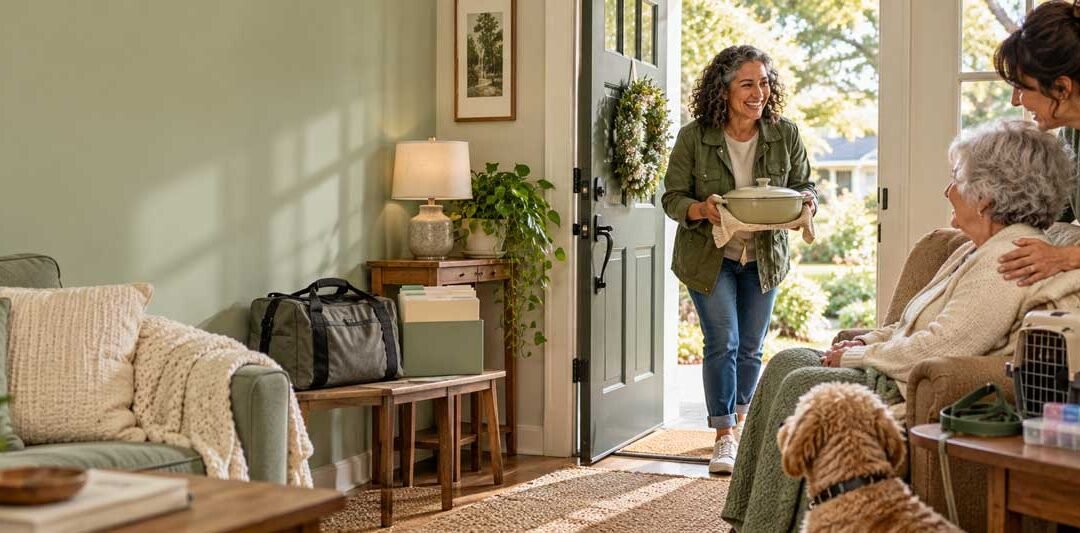
It takes a village. Here are a few ways to share the responsibility:
- Meals on Wheels: In some communities, meal delivery programs may also provide a brief wellness check or connect families with other resources. Ask your local program what it offers.
- Churches and faith communities: Some may be able to arrange visits, pastoral support, transportation, or help finding food and supplies.
- Neighbors and friends: A visit, a meal, or help with an errand can make a real difference.
- Insurance and public programs: Ask the person’s insurer, Medicare, or Medicaid which services may be covered. Coverage depends on eligibility, the care needed, and the specific plan or program.
Building a community around your loved one can support them and help caregivers feel less alone. Thank you for reading. I’ll continue this conversation next time.
Many blessings to you all.